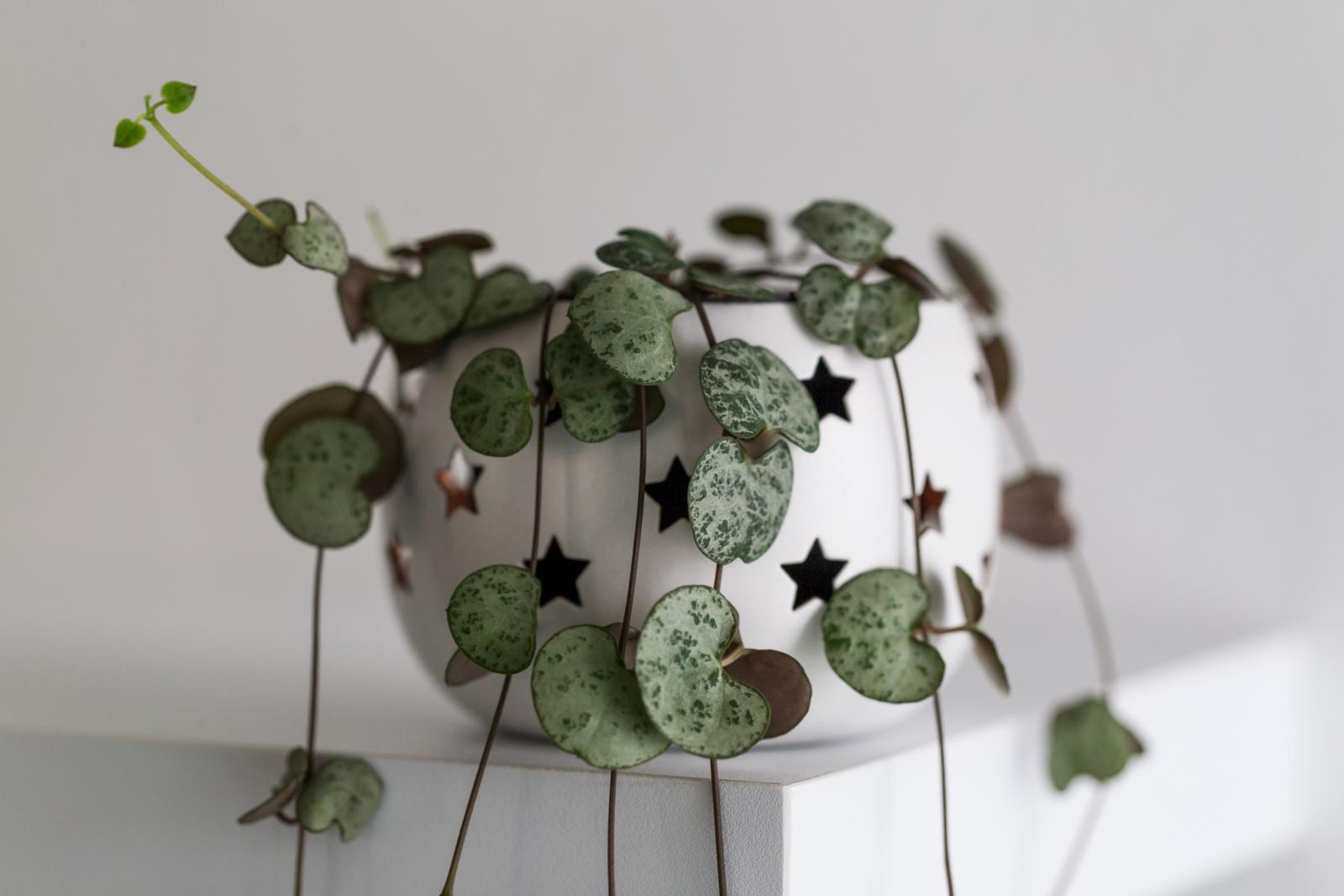
The String of Hearts plant is a succulent vine that grows in attractive heart-shaped leaves. It’s easy to care for and is one of the best hanging plants for beginners. This plant is ideal for adding interest to shelves and bookcases, but it also looks beautiful in a hanging basket.
If you’re new to growing succulents, string of hearts is one of the best hanging plants for beginners because it requires little maintenance and has few pests (only whiteflies), which makes it easy to care for. If you want to grow your own string of hearts but aren’t sure where to start, here are some helpful tips:
String of Hearts – the basics
String of Hearts plant is a succulent vine that’s easy to care for and makes a delightful addition to any home or garden. It loves thriving in full sun or partial shade, and growing indoors or out. The String of Hearts grows well in pots or hanging baskets, and it’s easily pruned to keep it small (if you want). When grown indoors, the String of Hearts does best in bright indirect light, such as near a window with curtains drawn at night. If kept outdoors, the String of Hearts should receive at least six hours of direct sunlight per day.

Light, temperature and humidity
You should place your String of Hearts in partial sun to full shade. It can tolerate temperatures as low as 50 degrees F and as high as 85 degrees F. The humidity level should be between 40-70%. If you keep the soil on the dry side, you’ll need to water more frequently because String of Hearts does not like to be root-bound (having too little space for its roots).
Keep an eye on your plant for signs of pests or disease. Poor air circulation, over-watering and improper feeding create an ideal environment for pests like mites and scale insects. Take care of any problems that arise quickly so they don’t spread!
Watering and fertilizing
String of hearts is a tropical plant, so it needs watering regularly. Water when the soil feels dry about an inch down. In winter, water less frequently to avoid over-watering and root rot. If you use peat moss or other organic material in your soil mix, it may hold onto moisture for longer than typical potting soils. Check the soil carefully before watering; if it’s not time yet, don’t do it! The plants usually prefer slightly acidic conditions (pH 5-6), so use a weak solution of peat moss or horticultural vinegar every few weeks during summer months as needed to maintain this balance.
When watering plants remember that they need more frequent watering than you might think – especially in hot weather – but also make sure not to saturate them again soon afterwards because they will just keep on absorbing moisture until they burst! Once you’ve watered thoroughly until water runs out of bottom holes then give them some time before adding more water again later on and repeat until plants are happy where they are at currently (you can always add more later if needed).
Soil and re-potting
When repotting your String of Hearts, ensure the soil is well-drained and that the pot size is at least three inches larger than the root ball.

Be sure to wait until your Ceropegia woodii has outgrown its current pot before re-potting. If you try to move it any sooner, you may inadvertently cause damage by separating some of its roots from one another—making it difficult for them to establish themselves in their new home.
Propagating your String of Hearts plant
Propagation is the process of growing new plants from seeds or cuttings. You can propagate String of Hearts by taking cuttings, or by rooting its seeds.
Propagation is easy through cuttings.
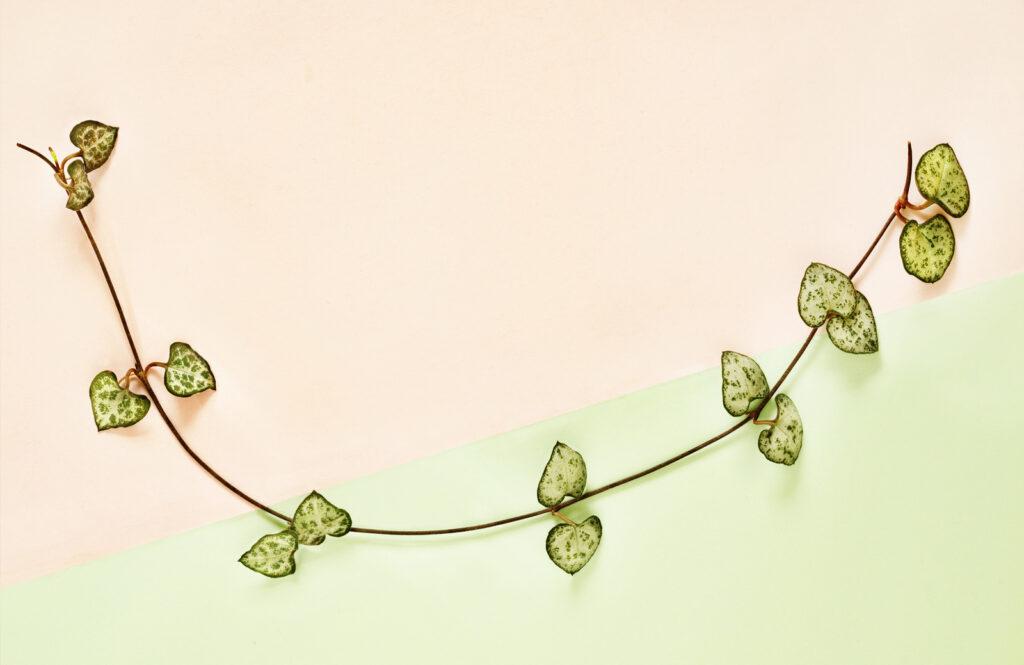
Make sure the cutting includes at least one ‘leaf’ (though they look more like beads on a string) and plant that in well-draining dirt. You may need to keep humidity higher during this time by misting your plants. Or use a tray filled with stones and water underneath your plants.
You will also want to avoid overwatering as it leads to root rot and death. Watering once every seven days is recommended for healthy growth without root rot problems. The best time of day to water is either early morning or evening. This is when temperatures are cooler, as heat can cause wilting. Wilting leads to bacteria buildup in the soil as well as decreased oxygen supply within the plant itself. And both contribute towards disease problems such as root rot in your String of Hearts tree!
To take a cutting, you’ll need:
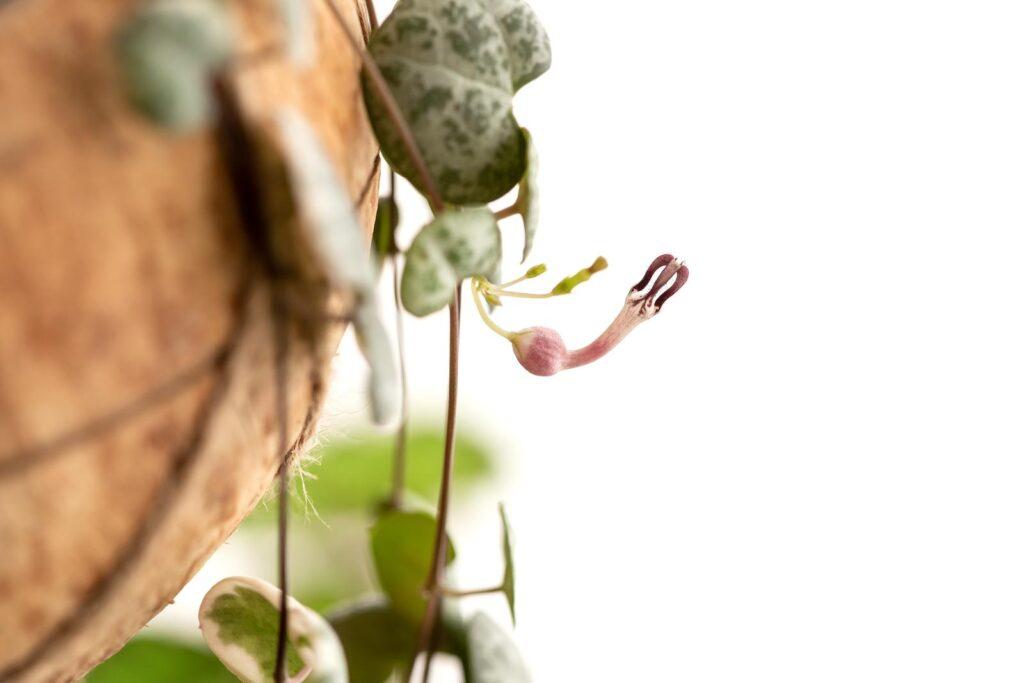
- String of Hearts seed pods or flowers in full bloom (the pods look like string-of-hearts candy)
- A sharp knife or pruning shears to cut the pod/flower stem into sections that are 2 inches long.
Varieties of String of Hearts
You may have seen these plants with names such as Ceropegia woodii, Ceropegia woodii variegata, or even White String of Hearts. They are all the same species and they all look exactly the same. The only difference between them is their flower color.
Ceropegia woodii grows from South Africa to Asia and Australia. It’s easy to care for as long as you know how to properly water it and how often you need to fertilize it (which I’ll get to later). If you’re looking for a plant that will thrive on neglect then this isn’t it! This plant has delicate blooms that need special care in order for them not just survive but thrive too! But don’t worry if you want one because now I’m going into detail about how much sunlight they need, what kind of soil works best with them, types of fertilizer they prefer being fed with (if any), watering schedules needed during different stages of growth (if any) – basically everything anyone would ever need to know about growing this beautiful little treasured gem right here:
Disease and pests
As far as diseases and pests go, there is little reason to worry about String of Hearts. It’s a very hardy plant that doesn’t require pesticides or treatments, so you don’t have to spray for pests or treat for disease.
The String of Hearts is an easy-to-grow succulent
The String of Hearts, or ‘rosary vine’, is a member of the Asclepiadaceae family, also known as milkweeds. Even though there are 1200 species in this group, only about 30 are common enough to be considered household names (such as milkweed and butterfly weed).
Asclepiadaceae comes from the Greek word ‘asklepios’ which means ‘to heal’. Because members of this plant family contain cardiac glycosides that can be used by humans when ingested or crushed against wounds, they have been used for centuries to treat ailments such as snakebites (by applying their sap to wounds) and heart disease (by using seeds).
A trailing succulent, it’s ideal for hanging baskets.
When planting this succulent in a hanging basket, you’ll want to make sure that the pot has holes in the bottom. This ensures the soil drains well and isn’t too wet. It’s also important that your potting mix is able to drain well—a mixture of one part peat moss, two parts perlite, and one part vermiculite works well for this plant because it provides excellent drainage.
It likes bright, indirect light, like from a south-facing window.
String of Hearts is a succulent and therefore prefers bright, indirect light. The best place to place it is in a south-facing window. But if you don’t have any south-facing windows you can also consider putting them in a west-facing one. Avoid placing the plant directly in front of an east- or west-facing window, as these will give your string of hearts too much light. You should also avoid placing the plant near any cold drafts or hot, dry air currents (such as from vents). Drafts may cause the leaves to drop faster than normal, while exposure to heat can make the leaves shrivel up.
It does best in dry conditions and needs well-draining soil. Water it about once a week if the soil is dry an inch below the surface.
If you’re watering your String of Hearts, it’s important to know that it does best in dry conditions. Allow the soil to dry out an inch below the surface before watering again. If you over-water this plant, its roots can rot and kill your String of Hearts, so keep this in mind!
You may need to water more often during summer since the air is so hot and humid. If your plant starts looking droopy or wilted, then it’s time for a drink!
Prevent leaves turning brown
Like many succulents, it can get too much sun and start to turn brown on the tips. Try moving it away from any windows or doors that might let in direct sunlight during the midday hours. If you notice your String of Hearts starting to wither, use a soft brush to dust some baby powder over its leaves. The powder will help protect against further damage from sunlight exposure (and make the plant smell nice!).
Take care of leaf breakage
When moving the plant, it is best to do so when the soil is dry. If you must move your String of Hearts when the soil is wet, be very careful and gently lift the plant out of its container. The leaves can break easily with too much handling or when they are slapped by other greenery nearby.
Variegated vs Green leaves
Variegated leaves are often more delicate than dark green leaves. So if you want something more hardy, aim for string of hearts with solid green beads instead of variegated ones.
Conclusion
Whether you’re looking for something that will add a pop of color to your home or just want a fun and easy-to-grow houseplant, the String of Hearts is an excellent choice. It looks great on its own or in a hanging basket where it can drape over the sides; either way, it’s sure to make heads turn!
Fancy a different type of string plant? Then check out our post on different varieties right here.