
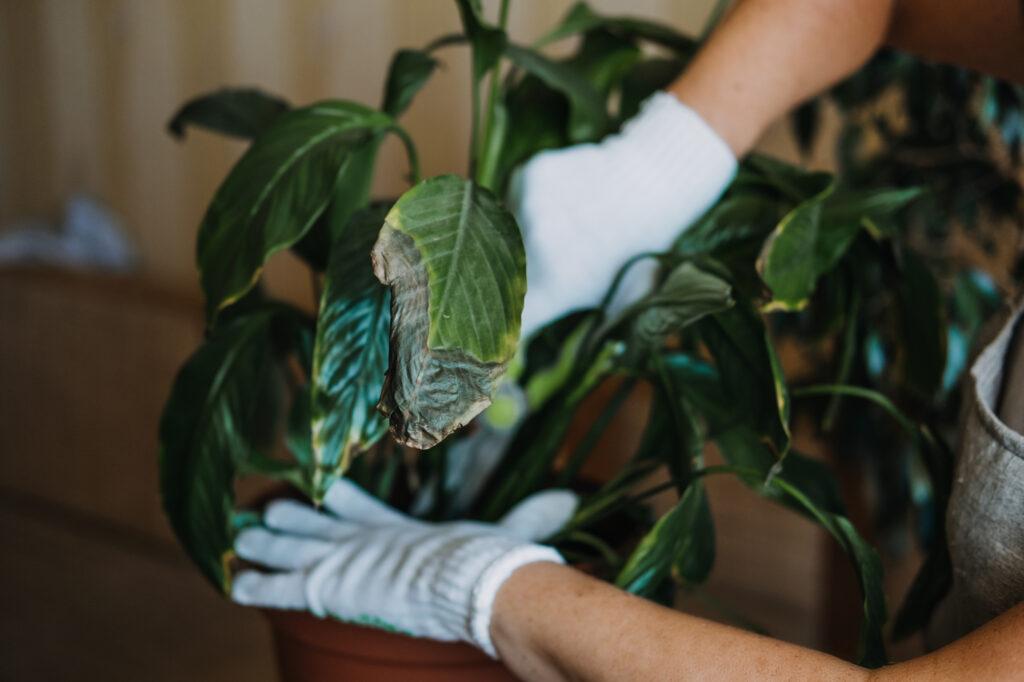
For many plant-lovers, it’s so disheartening seeing those peace lily brown tips and brown leaves appear on your favourite plant. Fortunately, understanding the causes of these brown tips and signs of distress on peace lilies is relatively straightforward. In this article we’ll explore the causes of peace lily brown tips and brown leaves. And we’ll also tell you how you can fix the issue, so your plant can enjoy the vibrant growth it deserves.
Causes of Peace Lily Brown Tips and leaves
Too Much Sun Exposure
If your peace lily is starting to develop brown leaves or brown tips, chances are it’s getting too much sun. Peace lilies prefer bright, indirect light, and a few hours of direct sunlight each day. But too much sun can cause the leaves to scorch and turn brown.
Take a look at the positioning of your plant. Is it in a spot that gets a lot of direct sunlight? If so, it may be time to move it elsewhere. Look for a spot that gets bright, indirect light for the majority of the day. This gives your peace lily the light it needs without damaging its leaves.
In addition to brown leaves and brown tips, too much sunlight can damage the peace lily’s foliage in other ways. The leaves may curl, become limp and weak, or even become yellow or wilted. If you notice any of these signs, move your peace lily to a spot with less sun exposure.
Overall, too much sun exposure is a common cause of browning leaves and brown tips on peace lilies. With the right care and attention, your peace lily should soon be back to its lush, green self.

Pest Infestation
Pest infestation is an often overlooked factor when diagnosing why the leaves of your peace lily are turning brown. Common pests that can be found on a peace lily include aphids, mealybugs, spider mites, whiteflies, and scale. So let’s run through these all in a bit more detail…
Aphids
Also known as plant lice, they’re small, soft-bodied insects. They’re found in colonies on the underside of leaves and around the stems. They excrete a sticky substance called honeydew, which can lead to sooty mold on the leaves if left untreated. To get rid of aphids, use a mild, soapy water solution to spray them off the plant and control their spread.
Mealybugs
Small, white, fluffy-looking pests that tend to cluster in cracks and crevices of the peace lily’s leaves and stems. They feed on the plant’s sap, causing the leaves to yellow, curl, and die. To remove mealybugs, use a cotton swab dipped in rubbing alcohol. Or or a mild, soapy water solution to dab the pests off the plant.
Spider mites
Extremely small, barely visible pests that feed on the sap of the peace lily. They are typically found on the undersides of the leaves and create webbing as they feed. Spray your peace lily with a strong stream of water and use insecticidal soap or neem oil to remove them.
Whiteflies
Small, white flying insects that feed on the sap of the plant. They will typically form large clusters on the underside of the leaves and can quickly spread to other plants. To control whitefly infestation, use yellow sticky traps to lure the insects to them, and then use insecticidal soap.
Scale
Small, immobile insects that can be found in clusters on the peace lily’s stems and leaves. They feed on the plant’s sap and will cause the leaves to turn yellow and die if left untreated. To control scale, use a cotton swab dipped in rubbing alcohol or insecticidal soap to remove them from the plant.
Poor Soil Quality
Peace lily brown tips are a possible sign that your plant’s soil quality is poor or lacking in important nutrients. Poor soil quality leads to unhealthy plants that eventually die, so it’s important to take action as soon as possible.
When examining your Peace Lily’s soil, look out for signs of dehydration, such as dryness and crumbling consistency. If the soil is dry, it’s a sign that it needs to be watered more frequently. If the soil is overly saturated with moisture or not draining properly, it can create an environment for root rot.
It’s also important to check for signs of nutrient deficiencies. Poor soil quality can mean that your plant isn’t getting enough of the necessary nutrients it needs to stay healthy. If the soil has a yellow tint, it could be lacking in essential nutrients like nitrogen, phosphorus, and potassium.
Finally, make sure to keep an eye on the pH level of your soil. A pH level of 6.5 to 6.8 is optimal for Peace Lilies. If the pH level isn’t within this range, it’s unlikely that your plant will absorb the necessary nutrients from the soil.
Incorrect Fertilization
One of the most common reasons for a peace lily to have brown leaves and brown tips is incorrect fertilization. Peace lilies are sensitive to too much fertilizer and this can lead to discoloration of the leaves, brown tips and even necrosis. Necrosis is a condition where the leaves and stems turn brown and die.
Proper feeding will prolong the life of your peace lily and maintain its health.
If your peace lily is over-fertilized and you see signs of discoloration, immediately stop fertilizing. Wait for the discolored leaves to fall off. Make sure to flush the soil or repot your peace lily in fresh soil to get rid of any leftover fertilizer. It is also important to check the soil every several weeks to make sure that the fertilizing cycle is consistent.
If the brown leaves and brown tips have already developed, you should try to remove them gently. Refrain from pulling on the leaves too hard as this can cause further damage to the plant. You can also cut off any discolored stems to prevent further spread of the discoloration.
It is important to remember not to over-fertilize your peace lily in order to prevent any discoloration and the potential death of the plant from incorrect fertilization. Following the manufacturer’s instructions and being mindful when fertilizing your peace lily are the best ways to ensure that your peace lily stays healthy and vibrant.
Watering
The most common cause is either too much or too little water. If your peace lily is getting too much water, the soil can become waterlogged, leading to root rot and brown leaves and tips. You need to make sure you have drainage holes in your pot, to help combat this.
If your peace lily is getting too little water, the leaves can start to turn brown due to dehydration. Try not to use tap water and instead opt for filtered which has some of the more harmful chemicals removed.
Humidity
Another common cause of peace lily brown leaves and brown tips is too little humidity. Peace lilies prefer high humidity, and too little of it can lead to dry and crispy leaves. If your peace lily leaves are turning brown, but the tips are still green and healthy, you may simply need to increase the humidity levels in your home.
Fixing Brown Leaves and Tips
Let’s get your peace lilies back to looking great with their beautiful, snow-white flowers and attractive foliage.
Now that you understand the causes of brown leaves and brown tips, let’s discuss how to fix them. The first step is to determine the cause and adjust your care accordingly. Is your peace lily getting too much water, too little water, too little humidity, or too much sun? If it’s receiving too much water, make sure you’re not overwatering, and if it’s getting too little water, water more regularly. If it’s not getting enough humidity, try misting the leaves or using a humidity tray. And if it’s getting too much sun, move it to a shadier spot.
Once you’ve identified the cause and adjusted your care, it’s time to nurse your peace lily back to health.
Remove
Remove any dead or damaged leaves and gently wipe the leaves with a damp cloth. You can also apply a balanced liquid fertilizer to give your peace lily an extra boost. With the right care, your peace lily should recover and be back to its beautiful, full and healthy self in no time.

Provide Shade
One of the main causes of brown leaves and brown tips on peace lilies is too much sunlight. Peace lilies prefer to be in bright, indirect light and dislike direct full sun. To keep your Peace Lily in good shape, try to keep it out of direct light for most of the day. When it comes to sunlight, it’s important to gradually acclimate your peace lily to its new light source. Make sure to slowly increase the amount of sunlight your peace lily is exposed to so that it can slowly develop a higher tolerance for sunlight. Too much sudden sunlight can cause sunburn, which will result in brown spots and leaves.
If your Peace Lily is currently in direct sun and is already showing signs of stress such as brown leaves and brown tips, it is important to move it to a shady spot in your home. You should also check your Peace Lily regularly to make sure it’s getting enough water. If the leaves and tips are still browning, try reducing the amount of water you give it.
Reduce fertilizer
Another cause of brown tips and leaves on peace lilies is too much fertilizer. Fertilizer can be beneficial to the plant, but if you’re using too much it can burn the leaves, resulting in brown tips and leaves. Make sure to dilute your fertilizer to the correct concentration and only use it once a month.
If you’ve followed the above steps and are still seeing brown tips and leaves on your Peace Lily, it may be a sign of a nutrient deficiency. If this is the case, you can use a water-soluble fertilizer every two weeks to give your Peace Lily the nutrients it needs.
Increase humidity
Finally, make sure your Peace Lily has enough humidity. Too little humidity can cause the leaves to dry out, leading to brown tips and leaves. If your home is dry, try placing a humidifier near your Peace Lily or misting it frequently.
Examine for Pests
When looking at peace lilies, brown leaves and brown tips are often a sign that something is wrong with your plant. There are a variety of potential causes for this issue, and one of the first things to look for is pests. Check the plant closely for signs of an infestation, such as small white spots on the leaves or black sooty mold. Insects such as aphids, mealybugs, scale, and thrips can all feed on the sap of the peace lily and cause the leaves to turn brown.
Inspect the peace lily from top to bottom and look for any small insects or eggs that may be present. If you do find any pests, use a cotton swab dipped in rubbing alcohol to remove them. Alternatively, you can also use an insecticidal soap if the infestation is more severe. Be sure to check all areas of the plant, paying close attention to the underside of the leaves, where pests like to hide.
Replace Soil with Nutrient-Rich soil
Another common cause of brown leaves and tips on peace lily plants is inadequate nutrient intake. The plant may be lacking nitrogen, phosphorus, or potassium, which can cause the leaves to turn brown and the tips to become discolored.
The most likely cause of brown leaves and brown tips is a lack of nutrients in the soil, so you should start by replacing the soil with nutrient-rich soil.
To do this, start by purchasing store-bought nutrient-rich soil. These soils are specially designed to give your lily all the nutrients it needs to thrive. If you’d like to get more creative, you can also make your own nutrient-rich soil right at home. To make your own, start by mixing together some compost, peat moss, and perlite. You can then add a slow-release fertilizer to give it an extra boost of nutrients. Make sure to mix this soil thoroughly, as the perlite will help to aerate the soil and prevent it from compacting.
Once you’ve prepared your new soil, it’s time to replace your existing soil. Start by carefully taking your peace lily out of its pot. You can then remove the old soil and dispose of it. Be careful not to shake the roots too much, as this can cause them to come loose. Once the old soil has been removed, you can refill the pot with the freshly-prepared nutrient-rich soil. Gently press down the soil, and then give your lily a good watering to help settle the soil.
After you’ve replaced the old soil with nutrient-rich soil, you should start to see an improvement in your peace lily. The brown leaves and brown tips should start to fade away and eventually disappear completely. You should also keep an eye on the soil, as you should replace it every few months to keep the nutrient levels high. With a bit of knowledge and regular maintenance, you can keep your peace lily healthy and vibrant for years to come!

Ensure proper drainage
Finally, check the soil for proper drainage and make sure the peace lily is not overwatered. Too much water can cause root rot, which will cause the leaves to turn brown. Take care to water your peace lily only when the top inch or so of soil is dry, as overwatering can be a major cause of brown leaves and brown tips.
Inspect for pests
Inspecting for pests, making sure the peace lily is receiving adequate nutrients, and checking the soil for proper drainage are all ways to prevent and treat brown leaves and brown tips on peace lily plants. If you do find pests or suspect an infestation, take steps to remove them and treat the plant accordingly.
Fertilize Properly
Fertilizing your peace lily is an important part of keeping it healthy and thriving. But too much of a good thing can be bad, so following the directions on the plant’s fertilizer label is key.
Start by looking at the back of your fertilizer package. It should provide detailed instructions on how to mix and apply the fertilizer to your peace lily. Generally, you should mix a small amount of fertilizer into the water, and then apply it every four to six weeks. Be sure not to overdose your peace lily, as too much fertilizer can cause its leaves to turn brown.
It’s also important to adjust your fertilizer usage according to the season. During the winter, for example, your peace lily doesn’t require as much fertilizer, so you can reduce the frequency of application to once every eight weeks. And keep an eye on your plant for signs of overfertilization. If your peace lily’s leaves are turning brown, or you notice brown tips on the leaves, this is a sign that it’s had too much fertilizer.
If you’re concerned about your peace lily’s health, it might be best to skip fertilizer altogether until the plant is back in shape.
At the end of the day, fertilizing your peace lily is a great way to keep it looking its best. Just be sure to follow the directions on the label to avoid overdoing it, and adjust your fertilizer use according to the season. With proper care, your peace lily will be a beautiful addition to your home for years to come.
Signs of Overwatering and Underwatering
When it comes to overwatering, it is not uncommon for peace lilies to become overwatered if the soil is kept too moist. In that case, the leaves may start to turn brown on the edges, as brown tips will start to appear. Other signs of overwatering include yellowing of the leaves, as well as a distinct wet or soggy feel to the soil. If you think your plant is being overwatered, let the soil dry out completely before watering again and try to reduce the amount of water you give the plant.
Underwatering, on the other hand, can also cause the leaves to turn brown in patches. The leaves may start to curl or look wilted, and the potting soil may look dry and cracked. If you think your peace lily is suffering from underwatering, try to water it more often, making sure to give it enough water to soak down to the bottom of the pot each time. You should also make sure that the pot you’re using has adequate drainage, so that the excess water can be easily removed.
Conclusion
Peace lilies are beautiful plants, but they need proper care and attention in order to stay healthy. Understanding how much sunlight your peace lily needs is the first step in making sure its leaves remain vibrant and green, instead of turning brown. With the right balance of sunlight, water, and fertilizer, your peace lily should stay healthy and gorgeous for many years to come. Just check our Peace Lily care guide for more tips.
By understanding the causes of brown leaves and brown tips, you can quickly and easily address any issues with your peace lily and get it back to looking healthy and lush.